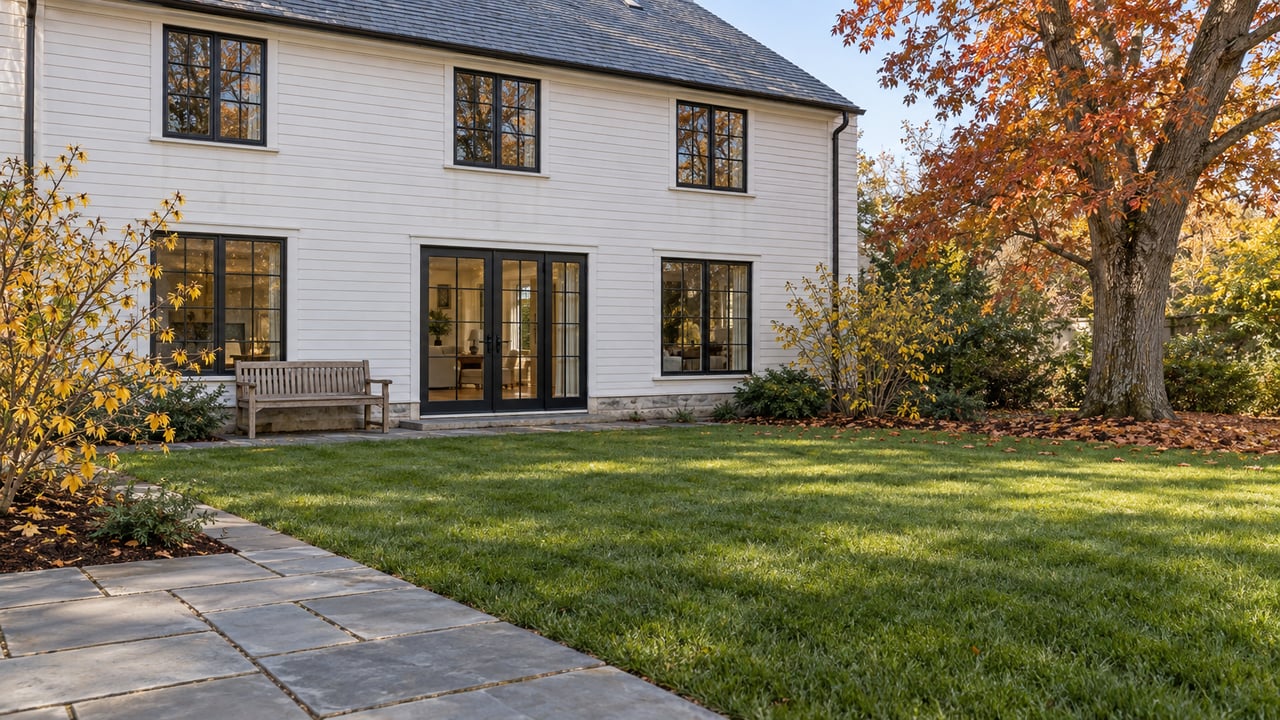
Why There Are Fences in the Woods at the Closter Nature Center
October 29, 2026
October 29, 2026
If you have walked the western end of the Orange Trail at the Closter Nature Center lately, have you wondered why a stretch of woods is fenced in with locust posts and heavy mesh? Farther along, by Anderson Brook, small saplings stand in their own cages along the White Trail.
They are there because the forest at 154 Ruckman Road stopped replacing itself, and the Center is now rebuilding the lower layers of that forest one plant at a time. Every fence on those trails is part of a test of what works.
In 2017, the Closter Nature Center and New Jersey Audubon drew up the Center's first Forest Stewardship Plan. The plan named two threats as the most serious. The first was deer browse, which had wiped out the natural regrowth of understory shrubs and of young canopy trees. The second was invasive plants, which had started crowding out key native species.
That first threat explains what you see on the trails. A healthy forest has layers: mature trees overhead, then saplings, then shrubs and wildflowers. When deer keep eating the lower layers, the big trees still look fine, but nothing is growing up to take their place. NJ Audubon looked at the plan again in 2023, and the Center then started a series of projects to stop the loss and restore the forest.
The replanting started in 2022 in the western part of the preserve, along the Orange Trail. In 2023 the Center built a one-acre fence that deer can't get through, using rot-resistant locust posts and heavy mesh. Volunteers and professional forest managers planted more than 200 native wetland plants inside it in spring 2024. A second one-acre fence was finished nearby in January 2025, and 200 plants took hold inside it that spring.
The fences work by keeping deer off one patch of ground. Inside, young plants can finally grow past the height where deer would eat them. The Center says it will maintain and monitor both fenced areas so it can measure whether the method works. Over time, it expects them to grow a healthy understory and slowly renew the forest canopy.
Walk from the Orange Trail to the White Trail and the method changes. In 2025 the Center extended the replanting to the White Trail and the land along Anderson Brook, paid for by a grant from the Borough of Closter's Open Space program. The ground there doesn't suit a large fence, so the Center protects trees and shrubs one at a time or in small groups instead.
That's why the brook-side planting looks scattered. The goal is the same native forest, with the protection fitted to the land. The grant also let the Center hire professional crews for most of the installation, with volunteers still helping.
| When | Where | What went in |
|---|---|---|
| 2022 | Western Orange Trail | Replanting begins |
| 2023 | Orange Trail | First one-acre deer fence |
| Spring 2024 | Inside the first fence | 200+ native wetland plants |
| January 2025 | Near the first fence | Second one-acre deer fence |
| Fall 2025 | White Trail and Anderson Brook | 345 plants with individual and small-group fencing |
| Spring 2026 | Where the White and Red trails meet | 410 plants |
Taken together, the Center says more than 900 plants went into the ground between 2024 and 2026. It describes that as the base for a restoration that will take years. If you have only walked one of these trails, it's worth walking the other. Both are working toward the same native forest with different methods.
Many of the plants inside those fences didn't come from a catalog. The Wild Woods Restoration Project helped decide which species to plant at the Orange Trail site and where. Its staff and volunteers also grow seedlings from locally collected native seed for planting at the Center. On September 19, the two groups held a morning planting session in a wetland a short walk from the trailheads. It was capped at 10 volunteers, and the plants were small enough that no heavy lifting was needed.
Other partners help too. Veolia, the local water supplier that owns the Oradell Reservoir, gave a grant in 2025. ARRC Native Nursery added a donation of plants. Together they let the Center buy and deliver more than 550 native plants for planting in and around the fenced areas.
The second threat from the 2017 plan is getting attention too. In early 2026, the New Jersey Invasive Species Strike Team surveyed the preserve's invasive plants and wrote a full management plan. That plan will guide invasive-plant removal in the Orange and White trail replanting areas and across the rest of the preserve.
The Center's own Forest Stewardship page puts it plainly: restoring the forest is an ongoing commitment with no set end date. That's a long horizon for a group with a small budget.
The Closter Nature Center became a nonprofit in 1962, leasing 80 acres from the Borough. The lease grew by 55 acres in 1985, and a one-acre donation in 1996 brought the preserve to 136 acres. The Center's trustees set its direction and oversee fundraising. The current executive committee lists Fraser Wilsher as president. The Center asks for memberships and donations, and grants from Veolia and the Borough's Open Space program pay for the replanting.
Then there's the community fundraiser. The Hike-a-Thon began in 2024 and is now in its third year. Participants raise money from friends, neighbors and coworkers through personal fundraising pages. Logging miles is optional during the fundraising period, which runs October 1 through November 7. The 2026 campaign page set a $7,500 goal and had reached $3,635 as of late October. Prizes go to three categories: most money raised, most donations received, and most miles hiked.
Much of the Center's day-to-day teaching comes from one person. Marc Gussen, the Naturalist and Education Director known as "Nature Marc," has been at the Center since 2001. The Center celebrated his 25 years with a party at the Cabin by Ruckman Pond on October 4. The invitation for Marc's 25th Anniversary Celebration said he has turned local trails into classrooms, and it made clear he is not retiring.
Two borough events share Ruckman Road that morning, so one trip covers both. The order below follows the clock.
A few other dates fit around that Saturday. The Closter Shade Tree Commission's Fall Foliage Photo Contest takes resident photos of trees anywhere in the borough until November 13. Each entry needs a release form and the photo's location, and finalists will be shown at the Closter Library. The release form is on the borough's Shade Tree Commission page. The Closter Environmental Commission's Walk/Bike Challenge runs through November 30 and names the Nature Center as one place to walk. For families, the Center's Fall After-School Program runs through December 17 for ages 4 to 14.
The trails are open every day from dawn to dusk. The two one-acre fences off the Orange Trail are the easiest place to see the difference. Inside them, young plants grow where deer can't reach.
At Ridgeco Properties, we think the places that make a Northern Valley town feel like home deserve as much attention as any house on the market, and the Closter Nature Center is one of them. If you're thinking about what your Closter home is worth this season, start with a conversation with our family. Get your free home valuation.
Stay up to date on the latest real estate trends.
With our knowledge and expertise in local trends of this ever-evolving market, we are dedicated to helping buyers and sellers alike.
RIDGECO PROPERTIES
RIDGECO PROPERTIES INC
613 Bergen Blvd
Ridgefield NJ 07650