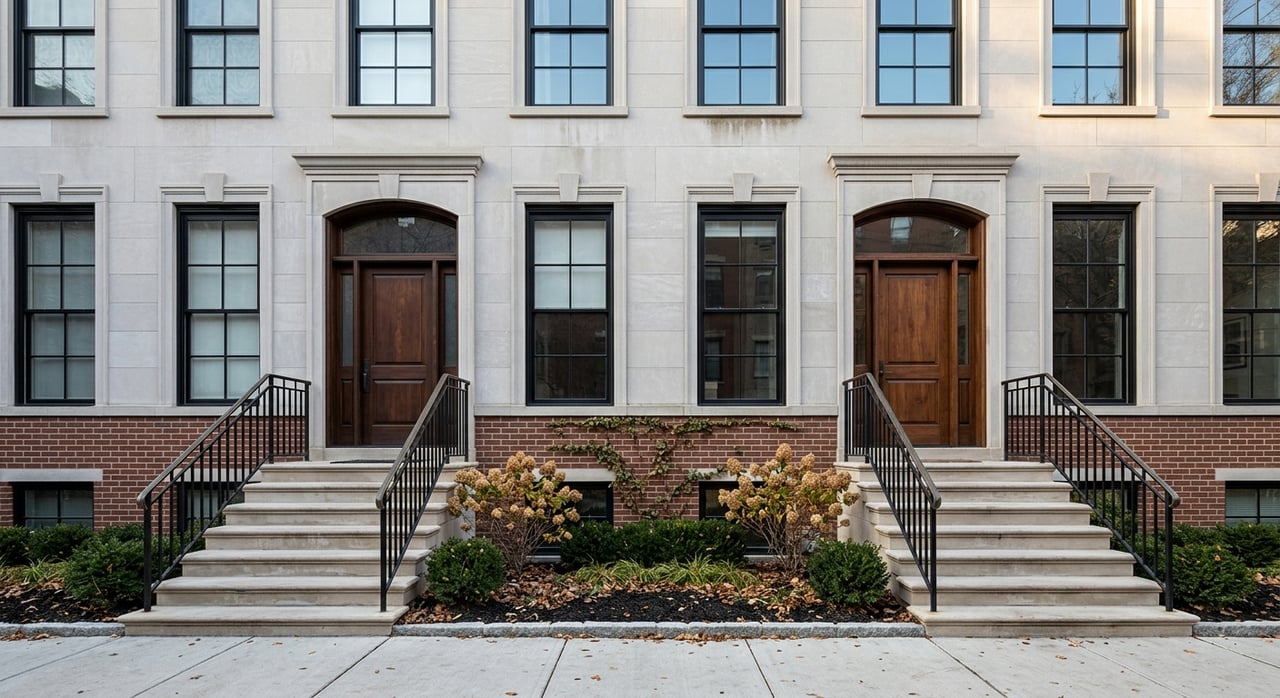
Choosing Between Condo And Duplex Living In Cliffside Park
April 16, 2026
April 16, 2026
If you are weighing condo versus duplex living in Cliffside Park, you are not alone. In a dense Bergen County market with strong transit connections and a wide mix of attached housing, the right choice often comes down to how you want to live, what you want to own, and how much day-to-day responsibility feels comfortable. This guide will help you compare ownership, costs, financing, and lifestyle so you can make a more confident move in Cliffside Park. Let’s dive in.
Cliffside Park is an unusually dense borough for Bergen County. According to the U.S. Census QuickFacts for Cliffside Park, the population estimate was 26,183 in 2024, and the borough had 26,875.5 people per square mile in 2020.
That density matters when you compare condos and duplexes. The borough’s location along the Palisades and its access to regional bus service connecting nearby communities and New York City make attached, transit-oriented housing especially relevant for many buyers. In practical terms, Cliffside Park often attracts people looking for convenience, flexibility, and efficient use of space.
Before you compare monthly costs or maintenance, it helps to understand the ownership structure. A condo and a duplex may both feel residential and private, but legally and financially they work very differently.
With a condo, you own your individual unit and also hold an undivided interest in the common areas. The New Jersey assessor’s handbook explains that a condo unit can be deeded, mortgaged, refinanced, insured, leased, and taxed separately.
That means your unit functions as real property with its own title. At the same time, the shared portions of the building are owned and managed collectively, which is where association rules, budgets, and fees come into play.
A duplex is defined by New Jersey as a building with two dwellings, and state guidance notes that one unit can be for sale while the other can be for rent, according to the New Jersey Department of Community Affairs publication.
For many buyers, a duplex feels closer to straightforward fee-simple ownership. If there is no association handling building maintenance, you usually have more direct control over the property and more direct responsibility for repairs and upkeep.
A condo can be a strong fit if you want a lower-direct-maintenance lifestyle. In a place like Cliffside Park, where density and transit access shape daily life, that can be a real advantage.
Condos usually come with monthly common-expense assessments. Under New Jersey condominium regulations, the association is responsible for maintaining, repairing, replacing, cleaning, and sanitizing the common elements and collecting common expenses.
Those common elements can include hallways, basements, siding, windows, doors, the roof, and shared parking or lawn areas. For you, that often means fewer exterior maintenance tasks to manage personally, but it also means an ongoing monthly fee.
The fee itself is only part of the picture. You also want to understand reserves, deferred maintenance, and whether the building may face a special assessment.
According to Fannie Mae’s condo project guidance, projects with critical repairs, inadequate insurance, major litigation, or certain short-term-rental or hotel-like characteristics may be ineligible for financing. Fannie Mae also notes that major repairs may be funded through reserves or a special assessment, so reviewing the project’s financial health is essential.
Condos are often simpler to finance than co-ops, but the project still matters. Fannie Mae requires lenders to review project eligibility, and HUD guidance referenced in the research shows that a condo project generally must be approved before FHA mortgage insurance can be processed for individual units unless a single-unit approval applies.
For buyers, the takeaway is simple. A healthy, well-managed condo project can support a smoother financing path, while project-level issues can create delays or limit loan options.
A duplex often appeals to buyers who want more control over the property. It can also be attractive if flexibility matters to you, especially if you are thinking about long-term use or the possibility of rental income from one unit.
If the property is fee simple and there is no association handling residential building maintenance, responsibility usually falls more directly on the owner. The New Jersey Department of Community Affairs notes that where an association has no residential building-maintenance duty, individual owners are responsible for maintaining the residential building.
That setup can mean less monthly overhead than a condo. It can also mean more variable repair costs over time, since you are not spreading major building expenses across a larger group of owners.
One of the clearest advantages of a duplex is flexibility. New Jersey’s definition of a duplex specifically notes that one unit can be for sale while the other can be for rent, as outlined by the state construction code publication.
For some buyers, that opens the door to a live-and-rent strategy. For others, it simply means a property type that may align better with long-term ownership goals and a greater sense of independence.
Duplex financing usually follows the path for a two-family property rather than a project-interest review. Based on the contrast with condo and co-op project-level approval requirements in Fannie Mae’s materials, that can mean fewer project-level hurdles, though loan terms still depend on occupancy, borrower qualifications, and lender standards.
This does not always mean financing is easier in every case. It means the underwriting focus is often different, with more attention on the property and borrower rather than the financial condition of an entire condo project.
If you are deciding between the two, this side-by-side view can help clarify the trade-offs.
| Factor | Condo | Duplex |
|---|---|---|
| Ownership | Individual unit plus shared interest in common areas | Typically closer to fee-simple ownership |
| Monthly costs | Usually includes association fees | Often lower fixed monthly overhead if no association |
| Maintenance | Shared through association for common elements | More direct owner responsibility |
| Financing | Project eligibility matters | Usually financed as a two-family property |
| Flexibility | Best for unit-based living | May offer more control and possible rental use |
| Repair risk | Shared costs, but special assessments are possible | Costs may be less predictable and paid more directly |
The better option usually depends on your priorities, not just the purchase price. In Cliffside Park, both property types can make sense, but they support different ownership styles.
No matter which direction you lean, asking the right questions early can save time and reduce surprises.
This is one area where careful review pays off. New Jersey tightened structural-integrity procedures in 2024 for certain residential housing structures, which underscores the value of understanding inspection history, maintenance planning, and building condition.
For condo buyers, that means reviewing association documents, reserves, and repair history. For duplex buyers, it means taking a close look at the property’s systems, structure, and likely maintenance timeline so you know what ownership may really cost.
In Cliffside Park, condos often make sense for buyers who want convenience, shared upkeep, and a home that fits a dense, transit-oriented setting. Duplexes often make sense for buyers who want more independence, more control, and a property that may offer greater flexibility over time.
The right choice is the one that matches how you want to live and what kind of ownership experience you want day to day. If you are comparing condos and duplexes in Cliffside Park and want local guidance grounded in Bergen County experience, connect with Michael Broderick for tailored help as you weigh your next move.
Stay up to date on the latest real estate trends.
With our knowledge and expertise in local trends of this ever-evolving market, we are dedicated to helping buyers and sellers alike.
RIDGECO PROPERTIES
RIDGECO PROPERTIES INC
613 Bergen Blvd
Ridgefield NJ 07650
