Demarest Housing Styles And Micro-Neighborhoods Explained
April 2, 2026
April 2, 2026
If you are trying to understand Demarest, the first thing to know is this: you are not shopping a town full of interchangeable neighborhoods. You are really comparing housing styles, lot sizes, and small street-level pockets that can feel very different from one another. That can make your search clearer once you know what to look for. Let’s dive in.
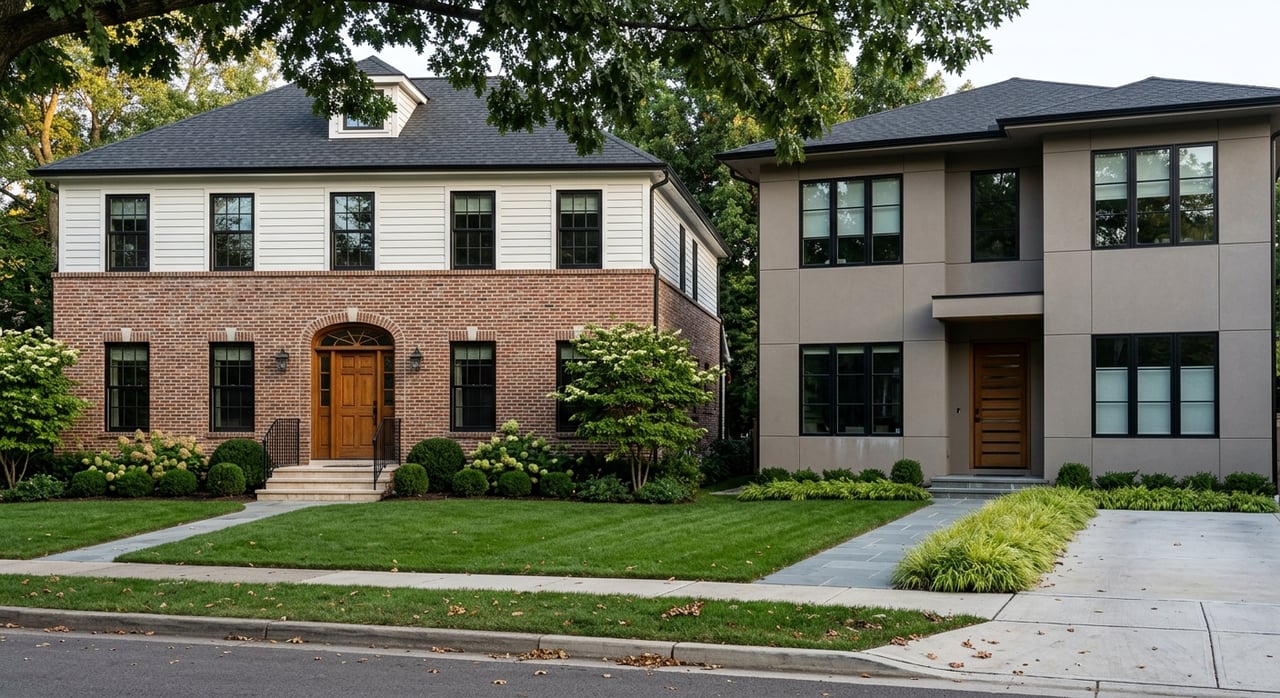
Demarest is one of the more consistent housing markets in Bergen County. According to the borough’s 2025 Housing Element and Fair Share Plan, the town had 1,743 housing units, and 1,706 of them were 1-unit detached homes.
That means 97.9% of the housing stock is detached single-family. There are only a handful of two-unit and small multifamily properties, and no meaningful large-scale apartment or attached-home inventory in the borough-wide profile.
This matters because your options in Demarest are usually not condo versus townhouse versus house. In most cases, your decision is between an older detached home, a newer custom-built home, or one of the few attached-townhome exceptions.
Demarest’s planning framework helps explain why the market looks the way it does. The borough’s 2023 Master Plan Amendment emphasizes preserving the scale and character of established single-family neighborhoods.
The same planning record, along with the 2025 housing plan, also points to a practical limit on future expansion. About 44.06% of the borough is constrained by environmental features, and official analysis found no realistic large vacant-land supply for added affordable development. In simple terms, Demarest is not a place where you should expect big new waves of apartment or townhome construction.
For buyers and sellers, that supports a market defined by scarcity, stability, and premium pricing. The housing plan places median owner value at $938,700 and median rent at $3,500+, reinforcing Demarest’s position in Bergen County’s high-value tier.
A large share of Demarest’s homes come from earlier building periods. The borough housing plan says 14.6% of homes were built before 1940, 25.8% in the 1950s, and 16.8% in the 1960s.
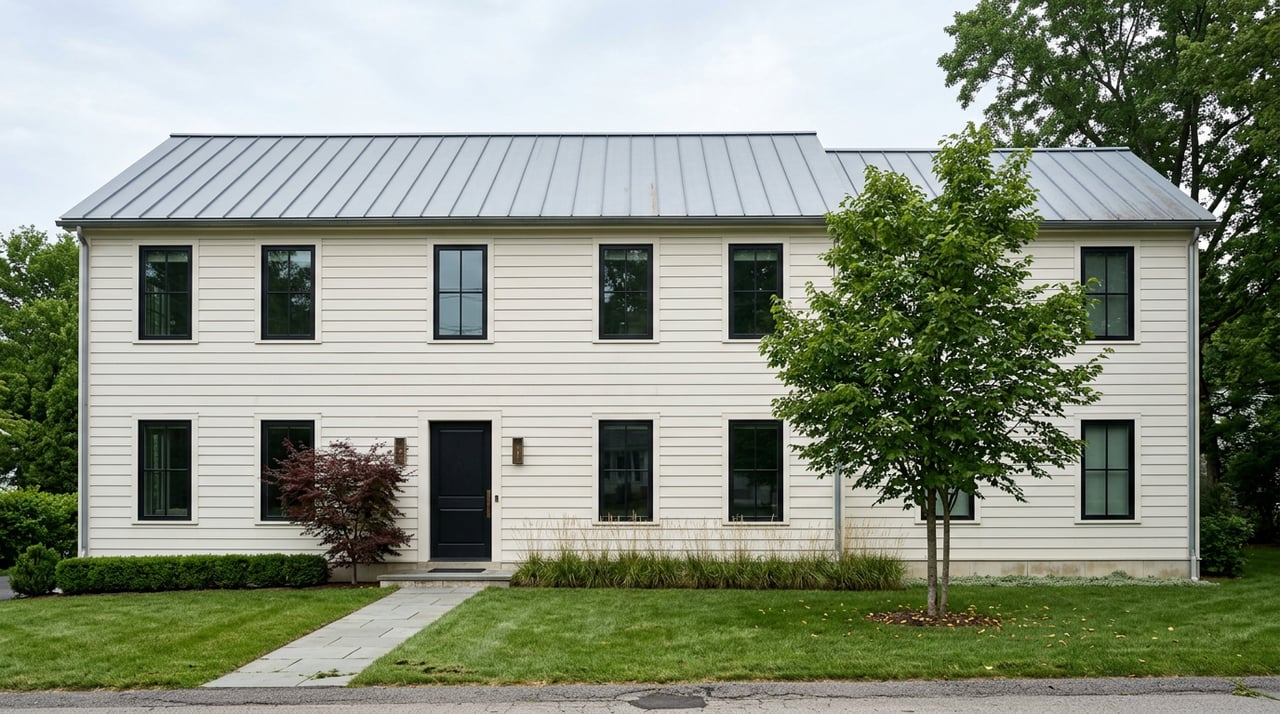
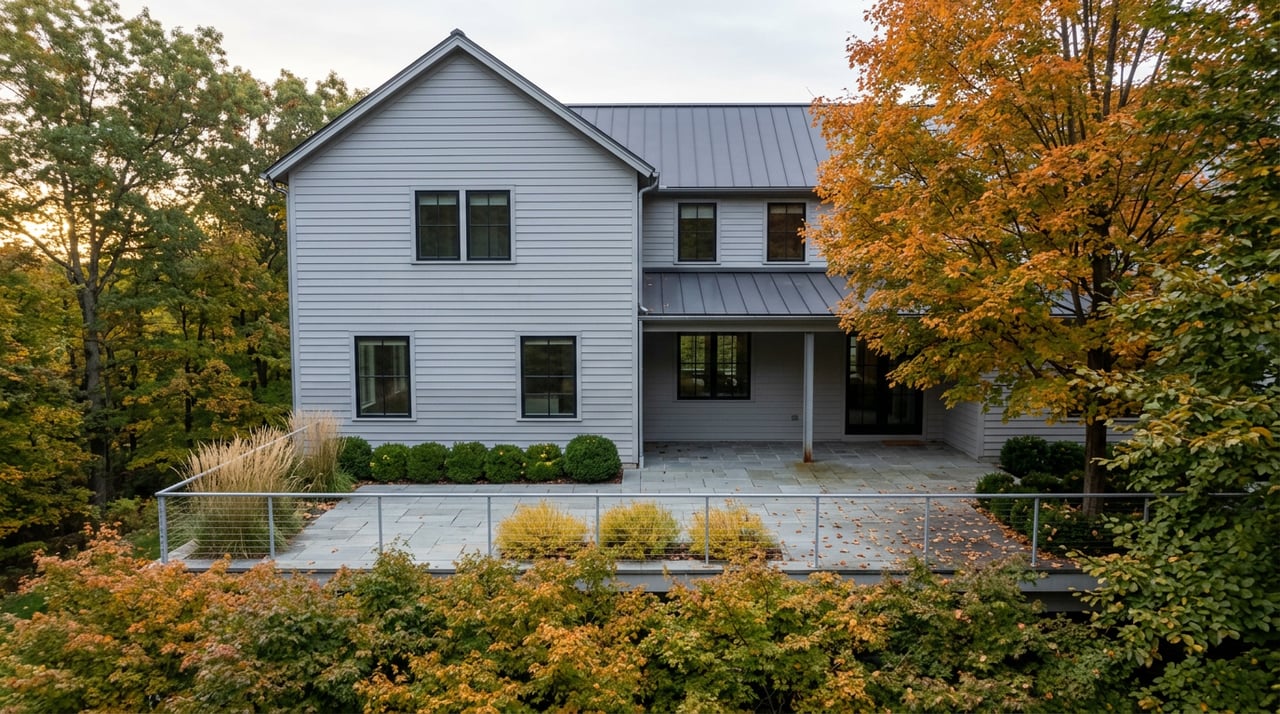
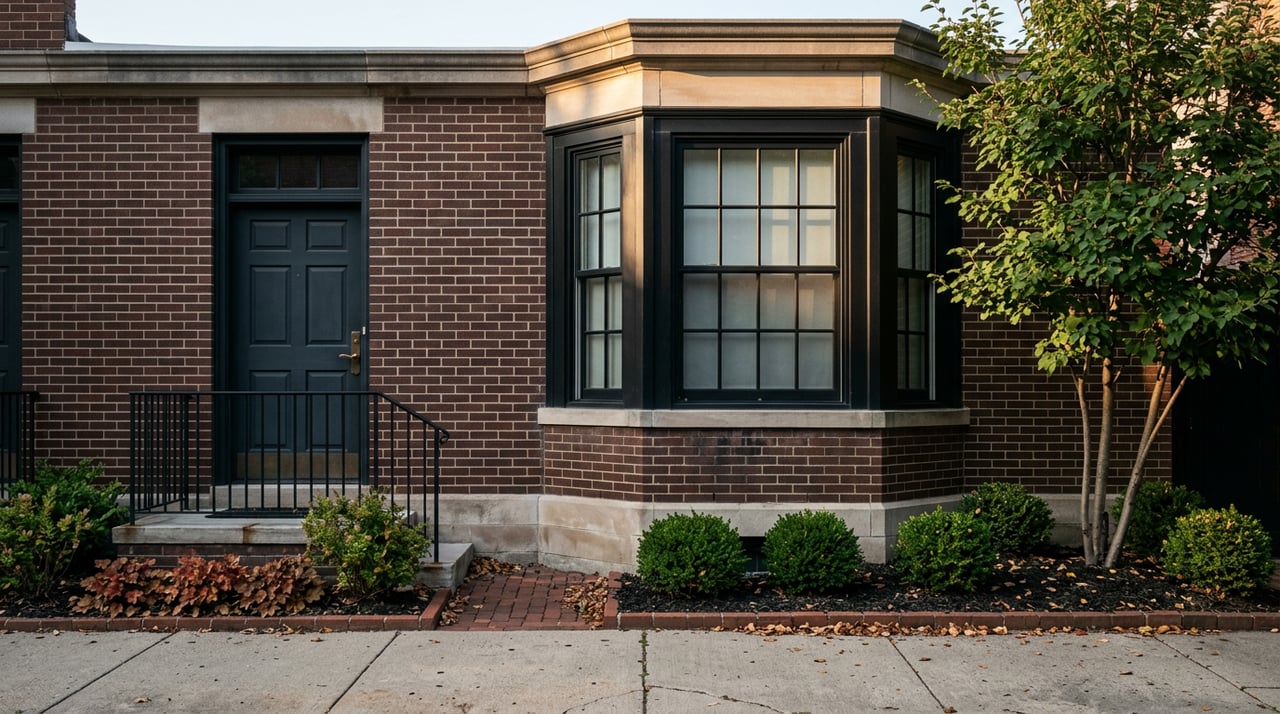
That age profile lines up with what buyers often see in real-world inventory: classic colonials, center-hall layouts, and renovated older homes on established streets. In practical terms, these properties often offer mature landscaping, familiar suburban streetscapes, and architecture that feels tied to the borough’s long-standing residential pattern.
Demarest also has a newer luxury layer, but it is not spread evenly across town. Current market examples in the research point to newer homes on streets like Northwood Avenue, Central Avenue, Hardenburgh Avenue, and Orchard Road.
These are often a very different product from older colonials. Instead of a traditional 3- or 4-bedroom layout, you may be looking at 5 to 8 bedrooms and 6,000+ square feet, with a newer custom-home presentation and a more luxury-driven price point.
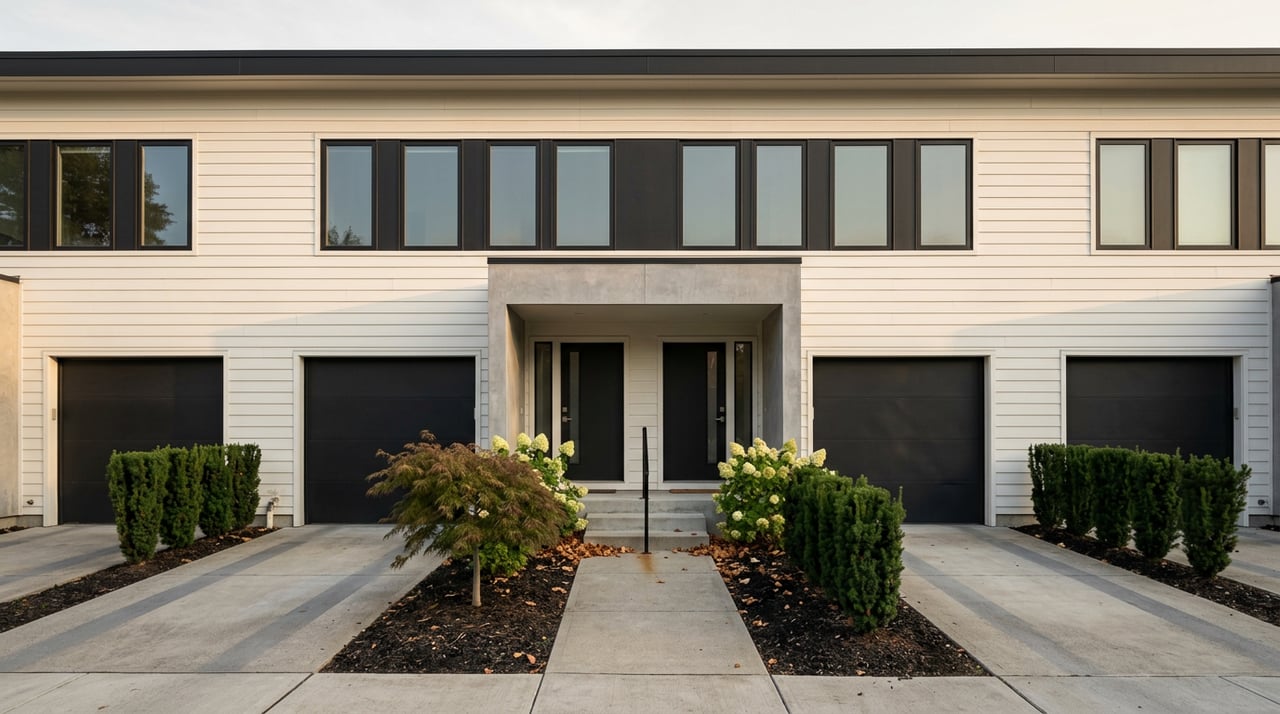
If you are hoping for townhouse inventory, it helps to set expectations early. Demarest’s official housing data shows no broad attached-home presence in its ACS profile, and planning documents identify only a few small attached or inclusionary developments.
That includes the Alpine Country Club/Bellaire Drive development with 38 townhouse units, plus an 8-unit inclusionary townhouse project at 95 County Road. In other words, attached housing exists, but it is a small-pocket option rather than a defining part of the market.
Demarest is better understood as a set of micro-areas than as a map of large, formally named neighborhoods. The borough’s limiting schedule and zoning framework show several single-family districts with meaningful differences in minimum lot sizes.
Those districts range from 40,000-square-foot minimum lots in R-A down to 10,000-square-foot minimum lots in R-D. That zoning difference can shape everything from privacy and setbacks to how spacious or compact a street feels.
The borough code also gives special setback treatment to roads including Knickerbocker Road, Hardenburgh Avenue, County Road, Anderson Avenue, Piermont Road, and Lenox Avenue. For buyers, that is a useful clue that certain corridors have established streetscape patterns and a distinct visual rhythm.
The clearest mixed-use and redevelopment pocket is around Hardenburgh Avenue, Park Street, Serpentine Road, Blanche Avenue, Christie Street, and Wakelee Drive. According to the borough’s 2020 Land Use Plan Amendment, this area includes single-family homes, two-family homes, commercial buildings, municipal uses, and vacant parcels.
That makes this part of Demarest feel different from the borough’s more purely detached-home sections. Official planning also notes that future redevelopment here could allow upper-floor housing above nonresidential uses, making it one of the few places where the housing conversation is not solely about detached homes on residential lots.
On the other end of the spectrum are the larger-lot pockets often described in market language as East Hill or the County Road enclave. The research examples include homes on Lake Road, Academy Lane, and County Road that highlight larger parcels, privacy, and mature landscaping.
If you are comparing price tiers, this is often where the product shifts from simply buying a house to buying land, scale, and a more private setting. That change in lot profile can be just as important as square footage.
The Alpine Country Club/Bellaire Drive area is one of Demarest’s clearest attached-housing micro-markets. It has a townhouse character that differs from the borough’s dominant detached-home fabric.
There is also the Sylco site on the eastern edge, where official documents describe a planned townhouse area of up to 24 units, though the same records note wetlands, stream buffers, and limited buildable acreage. So while attached housing does exist in Demarest, it remains concentrated in very specific, limited pockets.
Demarest is a low-inventory, high-end market, so budget strategy matters. The research notes that Realtor.com’s Demarest market overview showed 22 active listings and a median list price of $2.8625M in January 2026, while Zillow’s home-value page showed an average home value of $1.428M and 18 homes for sale in late February 2026.
Those numbers are not interchangeable, but they point in the same direction: inventory is limited, and price points move quickly depending on lot size, age, and housing style.
At the lower end of the Demarest market, buyers are usually looking at older or smaller detached homes. The research examples point to homes like 64 Highland Avenue around $949,900 and recent sales on Stelfox Street and Van Horn Street in the $700,000 range.
This range often means you are focusing on more compact homes, smaller lots, and streets closer to the borough core. If your goal is entry into Demarest, this is usually where flexibility on finishes, age, or square footage matters most.
This middle band can open the door to updated colonials, more polished detached inventory, or a rare townhome alternative. The research examples include 18 Ruth Lane around $1.095M and a custom-built townhome at 6 Cedar Court marketed at $1.79M.
For many buyers, this is the range where Demarest starts to feel more attainable without reaching the top luxury tier. You still need to be selective, but your options may widen to include better updates, more space, or a niche attached-home product.
Once you move above about $2.5M, the search often changes completely. This is where you are more likely to see new construction, very large custom homes, and premium corridors such as Northwood, Orchard, Hardenburgh, and East Hill-style locations.
At this level, you are often paying not just for interior finishes, but for a different lot and land experience. That is an important distinction in Demarest, where the upper tier often represents a different category of property rather than just a larger version of the same home.
If you want to shop Demarest strategically, focus on three questions first:
Those answers usually tell you more than a generic neighborhood label. In Demarest, housing type and street pattern often matter more than broad area names.
A simple way to think about it is this:
For buyers, understanding Demarest this way can save time. Instead of searching every listing the same way, you can match your budget and lifestyle goals to the parts of town where that product actually exists.
For sellers, this framing matters just as much. A home in a larger-lot corridor, a downtown-edge pocket, or a rare attached-housing cluster should be positioned differently because buyers are not making apples-to-apples comparisons across all of Demarest.
That is where local guidance becomes valuable. A boutique Bergen County brokerage with strong neighborhood knowledge can help you read the differences that are easy to miss if you only look at price per square foot.
If you are thinking about buying or selling in Demarest, working with a local team that understands the borough’s street-level housing patterns can make your next move more strategic. Connect with Michael Broderick for tailored guidance on Demarest homes, pricing, and positioning.
Stay up to date on the latest real estate trends.
With our knowledge and expertise in local trends of this ever-evolving market, we are dedicated to helping buyers and sellers alike.
RIDGECO PROPERTIES
RIDGECO PROPERTIES INC
613 Bergen Blvd
Ridgefield NJ 07650
