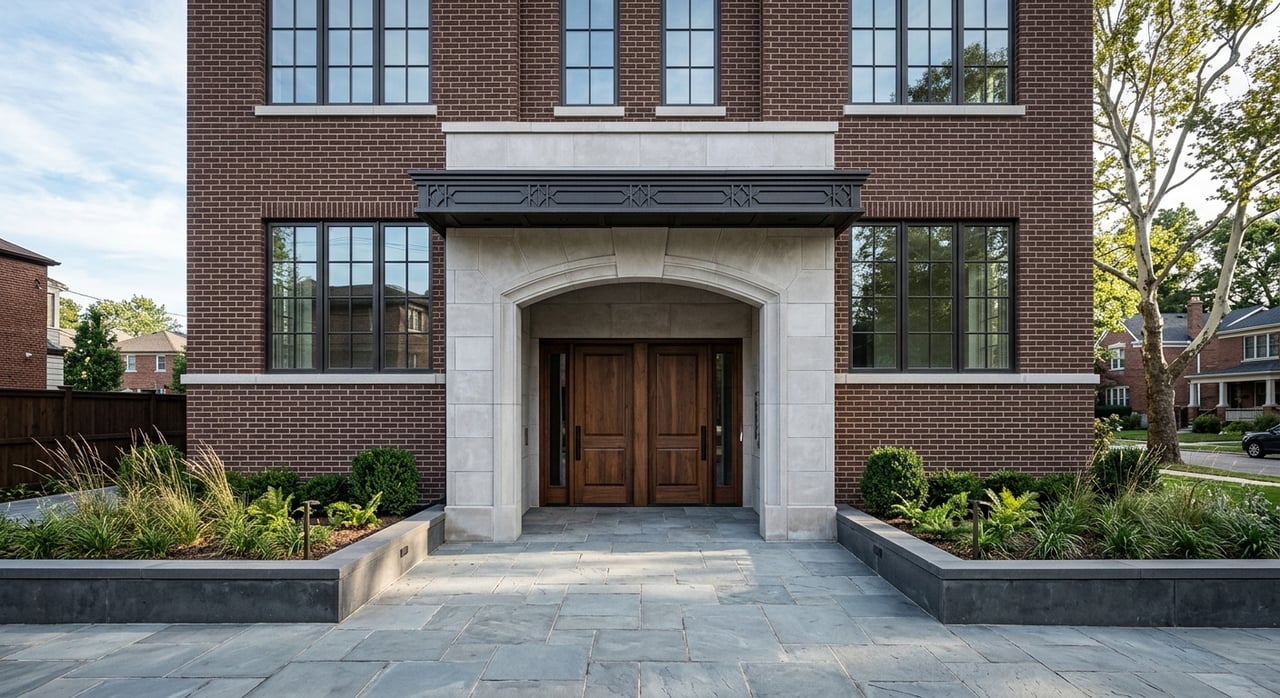
Fort Lee vs Edgewater vs Cliffside Park Buyer Comparison
May 14, 2026
May 14, 2026
Choosing between Fort Lee, Edgewater, and Cliffside Park can feel harder than it looks. These three Bergen County towns share the same general commuter corridor, but the day-to-day experience can be very different depending on where you buy. If you want to compare housing types, commute patterns, walkability, and overall lifestyle in a practical way, this guide will help you narrow the field. Let’s dive in.
Fort Lee, Edgewater, and Cliffside Park all sit along the Hudson River and George Washington Bridge corridor in Bergen County. Because they are so close to one another, many buyers start their search assuming the towns will feel similar.
In reality, their zoning, development patterns, and transit options point to three distinct buyer experiences. Looking at those patterns, Fort Lee comes across as the most balanced anchor market, Edgewater as the most waterfront-focused and ferry-oriented option, and Cliffside Park as the more neighborhood-scaled choice with strong bus access and walkability.
Fort Lee offers the widest residential range of the three towns. The borough covers about 2.6 square miles and has more than 40,000 residents, with zoning that includes one-family, one-and-two-family, low-rise residential, garden apartment, six-story apartment, mid-rise residential, high-rise apartment, central business, mixed-use, and redevelopment districts.
For you as a buyer, that usually means more variety in both housing style and setting. You may find older apartment stock, larger tower buildings, and properties closer to a traditional town-center environment, all within the same municipality.
Fort Lee has the most traditional town-center feel in this comparison. The borough highlights Main Street activity, Recreation Department programming, Fort Lee Historic Park, and Constitution Park, which together create a broader local-services environment than a town built mainly around the waterfront.
That wider mix can matter if you want convenience beyond your building or block. If your ideal home search includes everyday services, civic spaces, and a stronger sense of an established center, Fort Lee stands out.
Fort Lee is heavily bus-oriented. NJ Transit lists the borough on the 154 route to New York, and the 156, 158, and 159 route family serves the Fort Lee-Edgewater-Weehawken-New York corridor.
The borough’s Parking Authority also runs free local bus service for seniors, a main street shuttle, and ferry shuttles to Edgewater Landing. That points to a town built around structured transit and parking management, rather than a purely car-based lifestyle.
Fort Lee has a Walk Score of 77, which places it in the very walkable range. That does not mean every block feels the same, but it does suggest many daily errands can be done without getting in the car.
For buyers who want options, that matters. A more walkable town with varied housing and established transit can give you flexibility as your needs change over time.
If your search starts with river views, promenade access, or a ferry commute, Edgewater may be the clearest fit. Its zoning is more explicitly waterfront-focused, with single-family, one-and-two-family, multifamily, waterfront commercial, mixed-use commercial/residential, and a Southern Waterfront Redevelopment Zone.
Planning documents also reference mixed-use high-rise development of roughly 25 stories. In practical terms, that points to a market weighted more toward condos, rentals, and mixed-use buildings along River Road and the Hudson frontage, with some lower-density areas away from the water.
Edgewater’s lifestyle is closely tied to the waterfront. The borough maintains a Hudson River Waterfront Walkway Special Improvement District, operates the marina and ferry landing at 989 River Road, and promotes walkway-related events and improvements.
That gives the town a different personality from Fort Lee and Cliffside Park. If you picture your routine including the waterfront walkway, river-facing buildings, and a more condo-dense setting, Edgewater is the strongest match of the three.
Edgewater is the ferry-defined town in this comparison. The Edgewater Ferry runs on weekdays to Midtown/W39th Street, and downtown riders transfer at Port Imperial for Brookfield Place or Pier 11/Wall Street.
The borough’s shuttle system is designed to connect residents to the ferry landing. NY Waterway also notes that Fort Lee runs free shuttles to the same landing, which adds flexibility for some nearby commuters.
Walkability in Edgewater can vary a lot by address. Research examples range from a Walk Score of 80 at 860 River Road and 71 at Edgewater Town Center to 45 at 2309 City Place.
That spread matters if you are comparing listings online. In Edgewater, it is especially important to evaluate each property block by block rather than assume the whole town functions the same way.
Cliffside Park sits between Fort Lee’s mixed-use density and Edgewater’s waterfront identity. Its zoning includes one-family, one-and-two-family, townhouse, mid-rise, and high-rise residential zones, plus service commercial, general commercial, a Towne Centre Redevelopment Area, and revitalization overlays on Anderson Avenue and Palisades Avenue.
That creates a more neighborhood-scaled feel while still offering a meaningful range of apartment and condo options. For buyers who want residential streets without giving up access or convenience, this balance can be appealing.
Cliffside Park’s amenity pattern is more street-corridor based than waterfront based. Palisades Avenue, Anderson Avenue, and related commercial and redevelopment areas shape much of the local rhythm.
That can translate to a more local, residential feel. If you prefer daily life centered on neighborhood corridors instead of a waterfront promenade, Cliffside Park deserves a close look.
Like Fort Lee, Cliffside Park is bus-led. NJ Transit’s 156 route includes Cliffside Park stops on Palisade Avenue, and the 159 route serves both Fort Lee and Cliffside Park stops.
This makes the borough a solid option if you want Manhattan bus access without making a ferry commute your priority. For many buyers, that is a practical and reliable fit.
Cliffside Park compares well on walkability. Walk Score gives the borough an average of 83, and ParkServe data says 75% of residents live within a 10-minute walk of a park.
Those numbers support what many buyers notice on the ground: a place where local errands and open space can be more accessible without a car. If walkability is high on your list, Cliffside Park has a strong case.
Here is the simplest way to think about these three towns when you start your search.
| Town | Best fit for | Housing pattern | Commute pattern | Lifestyle feel |
|---|---|---|---|---|
| Fort Lee | Buyers who want variety and a structured commuter setup | Broadest mix of one-family, multifamily, low-rise, mid-rise, high-rise, mixed-use | Bus-heavy, plus local and ferry shuttle support | Traditional town center, parks, services, broad inventory |
| Edgewater | Buyers who want waterfront living and ferry access | More condos, rentals, mixed-use, and waterfront-oriented development | Ferry-focused with shuttle connections | River views, walkway access, waterfront lifestyle |
| Cliffside Park | Buyers who want a residential feel with strong bus access | One- and two-family, townhouses, mid-rise, high-rise | Bus-led commute | Neighborhood-scaled streets, strong walkability, corridor-based amenities |
The right choice often comes down to how you want your week to feel, not just what your home looks like on paper. A beautiful unit can still be the wrong fit if the commute, surrounding streets, or daily convenience do not match your routine.
If you want the broadest inventory and a bridge-adjacent town center, Fort Lee is often the most balanced option. If you want Hudson River living and a ferry commute, Edgewater stands out. If you want strong walkability, bus access, and more residential-scale streets, Cliffside Park may be your best fit.
As you compare listings in these towns, it helps to keep your questions practical and location-specific.
When you tour with a clear framework, it becomes much easier to separate a nice property from the right property.
If you want help comparing specific buildings, streets, or housing types in Fort Lee, Edgewater, and Cliffside Park, a local guide can save you time and help you focus on the towns that truly fit your lifestyle. When you are ready to start your search, connect with Michael Broderick for tailored guidance across Bergen County’s most in-demand commuter markets.
Stay up to date on the latest real estate trends.

With our knowledge and expertise in local trends of this ever-evolving market, we are dedicated to helping buyers and sellers alike.
RIDGECO PROPERTIES
RIDGECO PROPERTIES INC
613 Bergen Blvd
Ridgefield NJ 07650
